










How a heat pump works: the principle in plain words
Prepared by EKO2ŠILUMA engineers · Updated 2026-10-29
A heat pump sounds complicated, but you see its principle every day in your kitchen. A refrigerator takes heat from inside and releases it through the coil at the back. A heat pump does the same – only it "cools" the outdoors and releases the heat into your home.
Four steps of the cycle
- Evaporation. In the outdoor (or ground) heat exchanger the refrigerant is very cold, so it absorbs heat even from cold air and boils into vapour.
- Compression. The compressor squeezes the vapour, raising its pressure and temperature.
- Condensation. The hot vapour releases its heat to room air or water in the indoor heat exchanger and turns back into liquid.
- Expansion. An expansion valve lowers the pressure, the refrigerant cools again and the cycle repeats.
Electricity drives the compressor, fans and controls. How much heat you get per kilowatt-hour of electricity is shown by COP (at given conditions) and SCOP (over a season). Actual values are on each model page; the terms are explained in SCOP, SEER and COP.
Air-to-air heat pumps
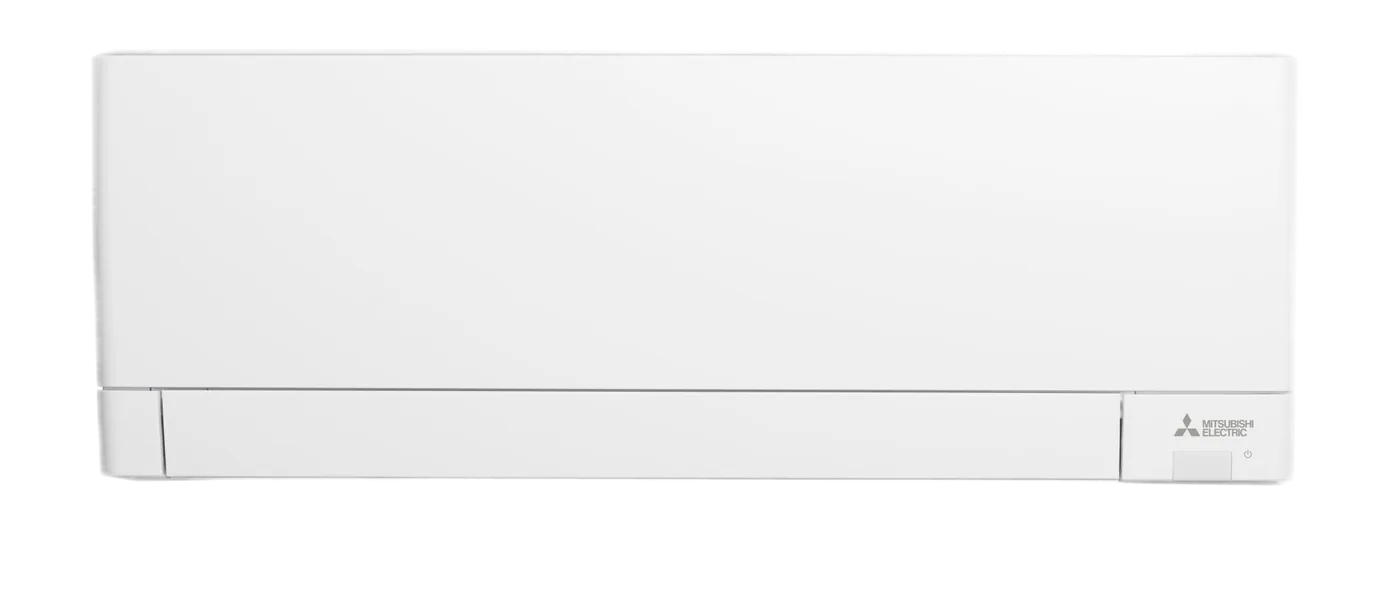
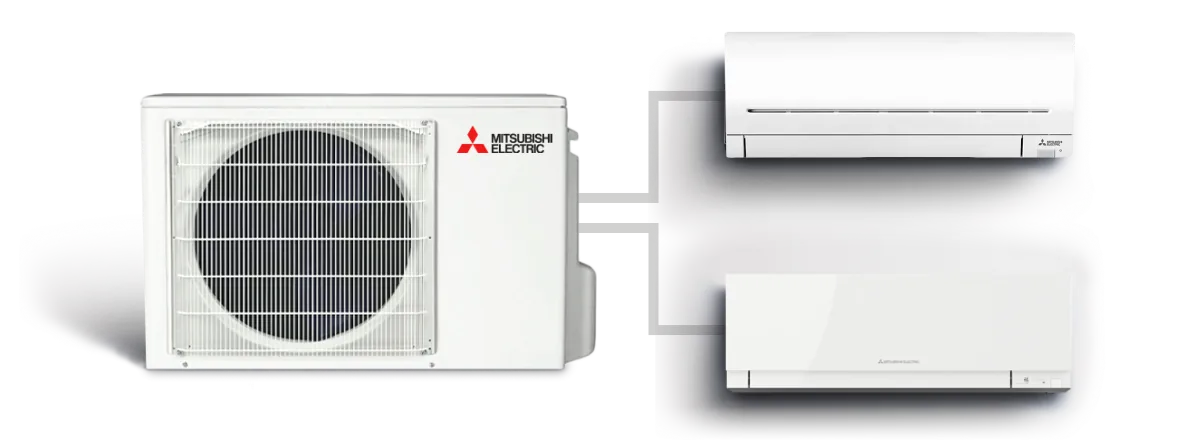
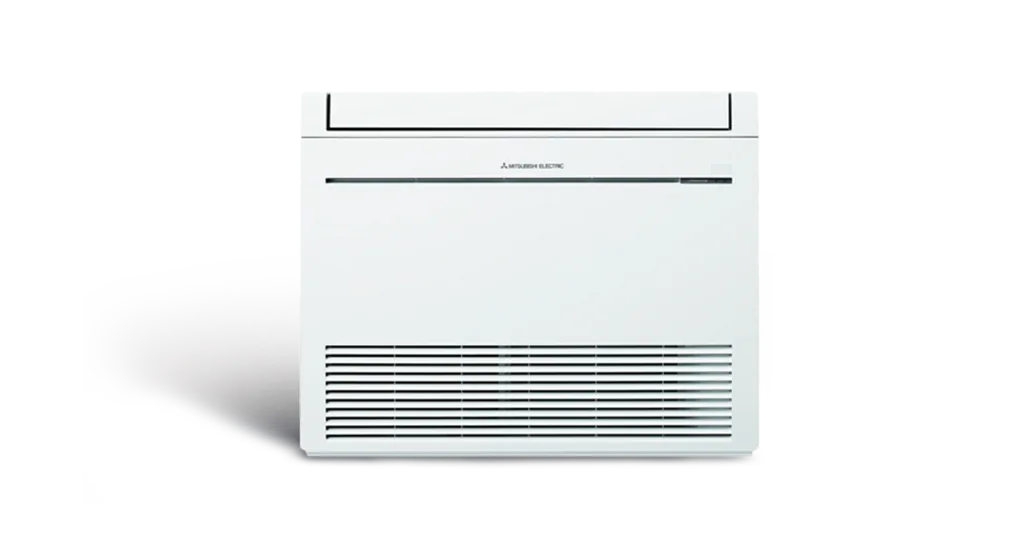
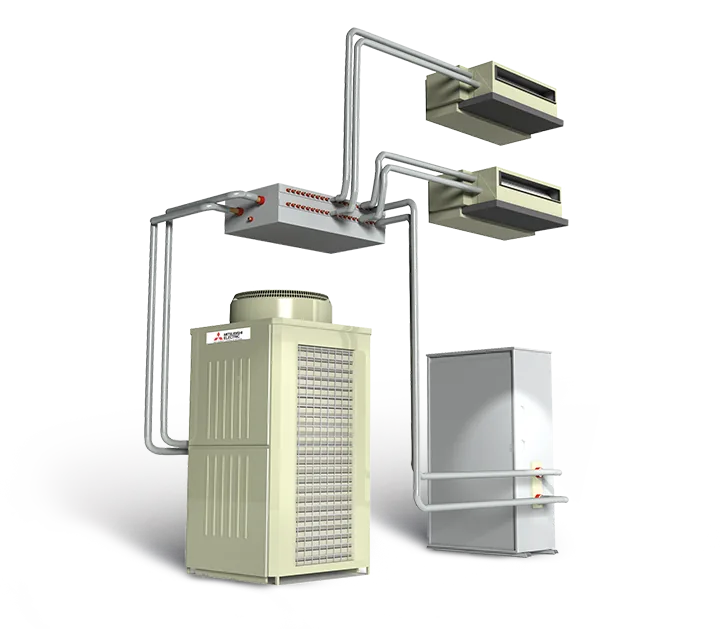
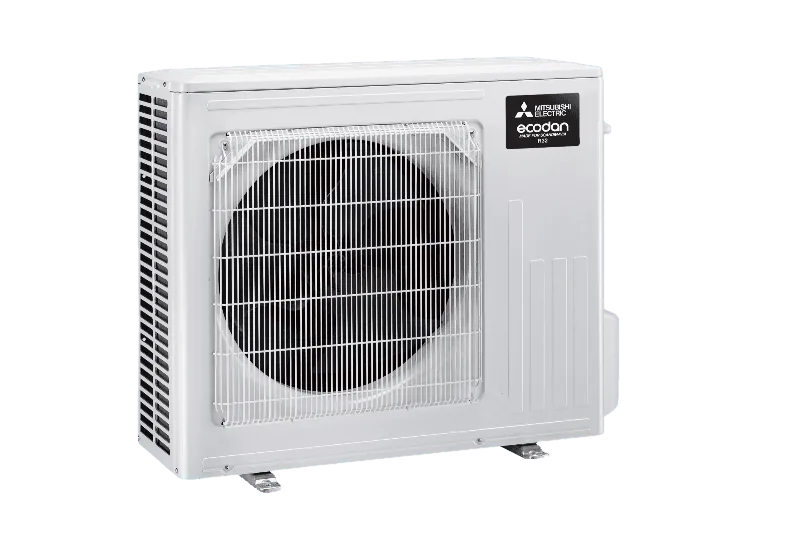
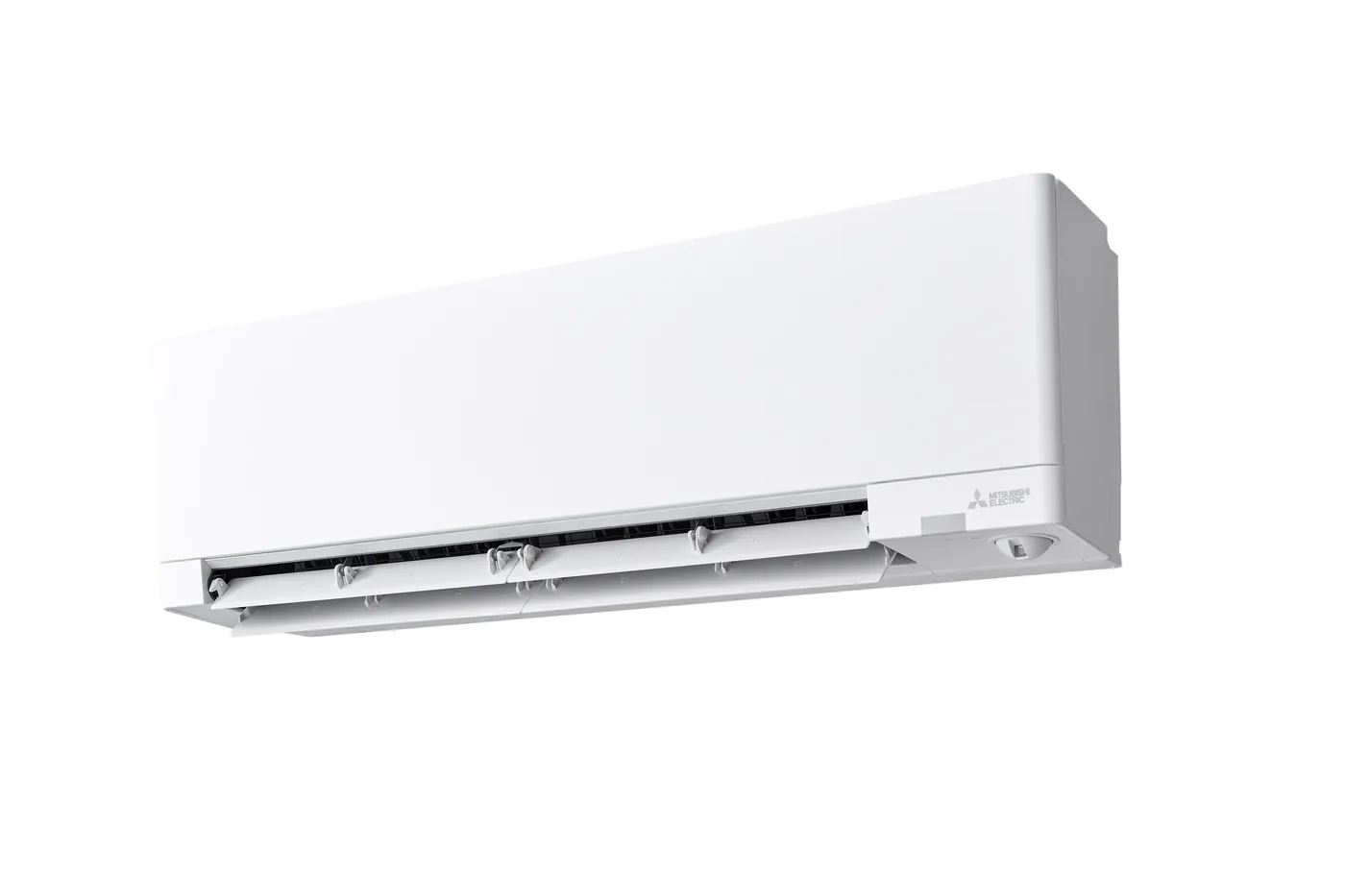
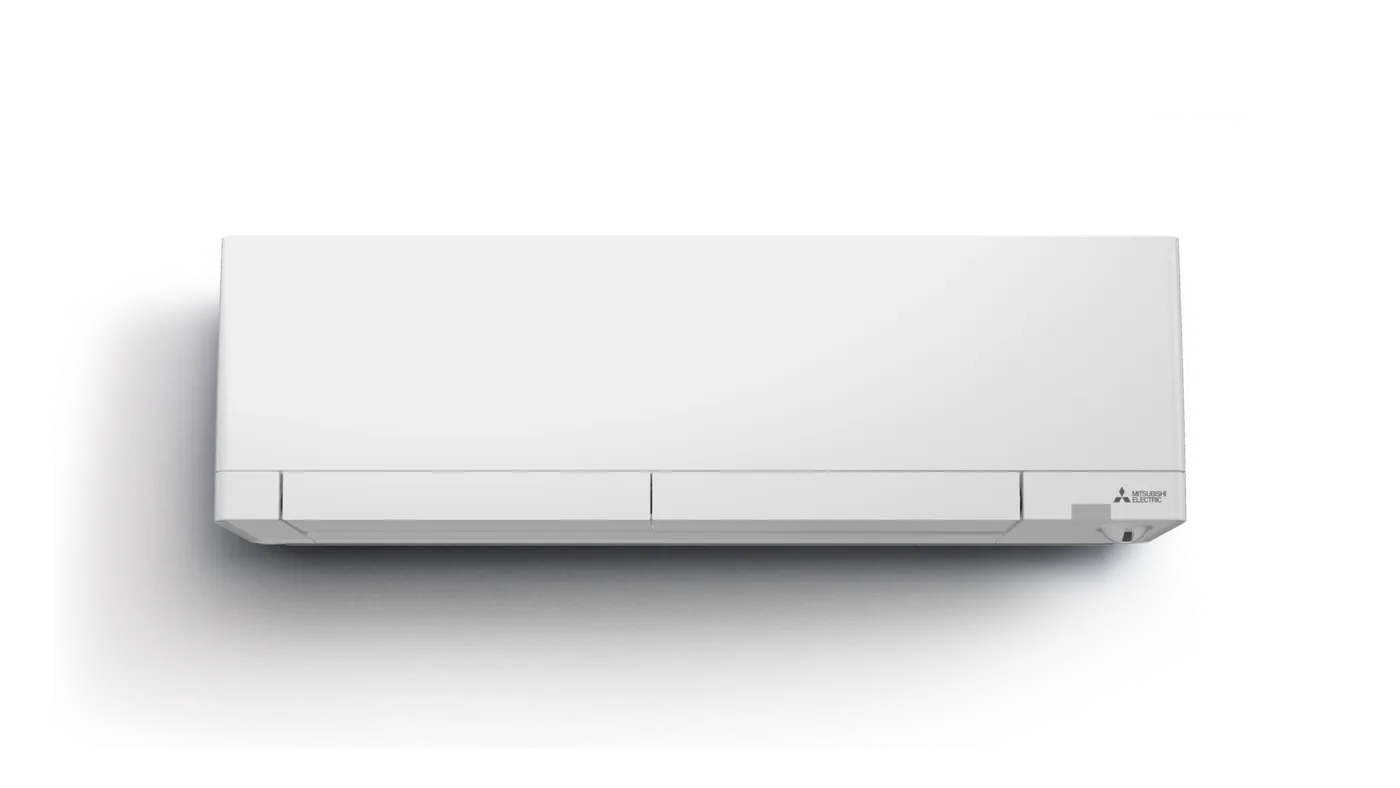
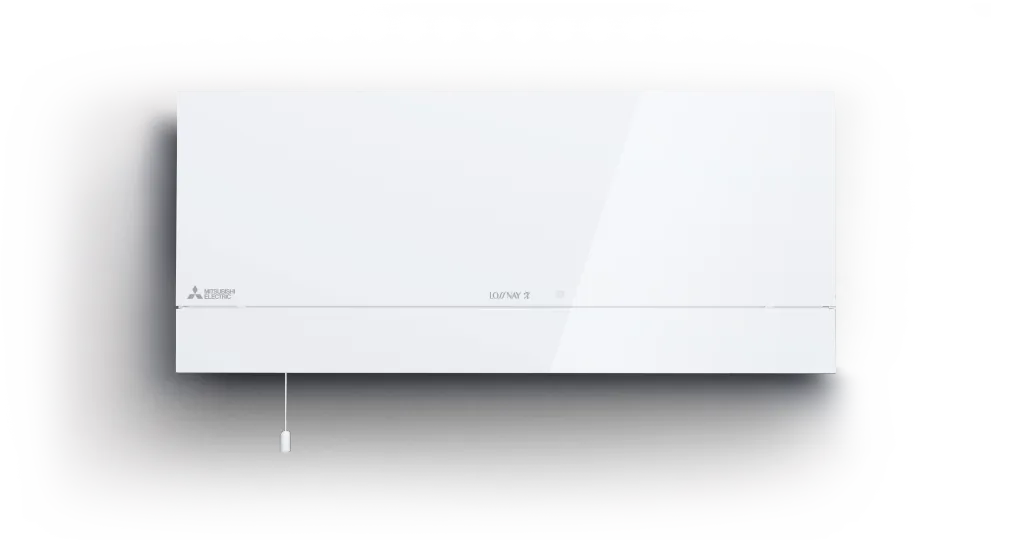
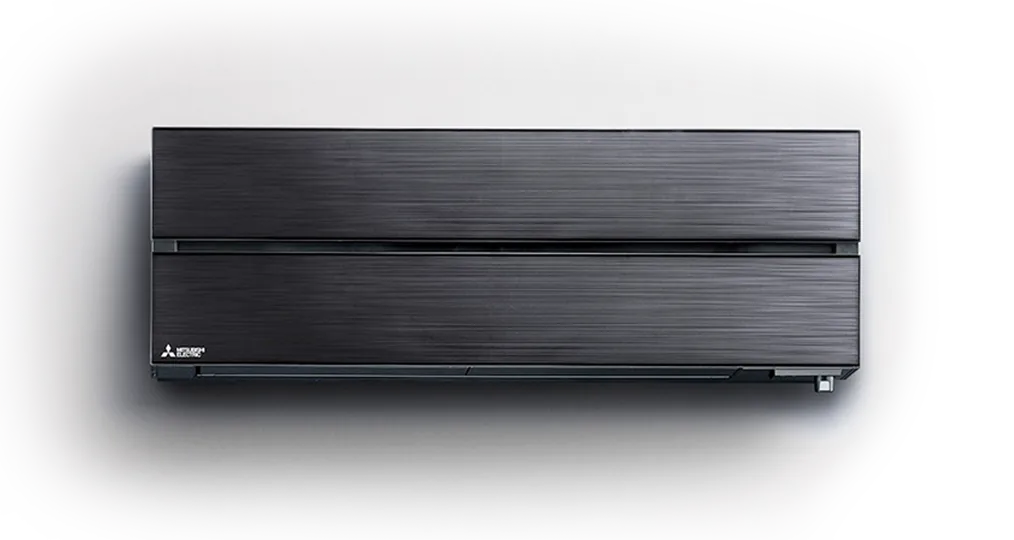
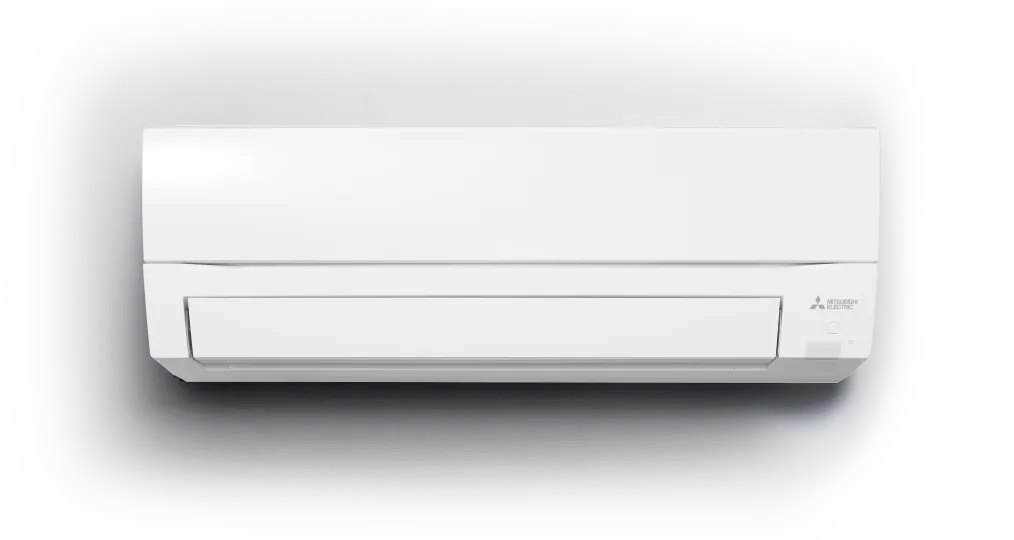
The system has an outdoor unit and one or more indoor units. The outdoor unit extracts heat from outdoor air and passes it through copper pipes to the indoor unit, whose fan spreads warm air into the room. In summer the cycle reverses and the same system cools. Note: an air-to-air unit does not heat radiators or floors – it heats only the air in rooms with an indoor unit. It works well as main heating in open-plan homes or alongside an existing system. Examples: MSZ-LN-VGHZ, MSZ-FT-VGK-SC.
Air-to-water heat pumps
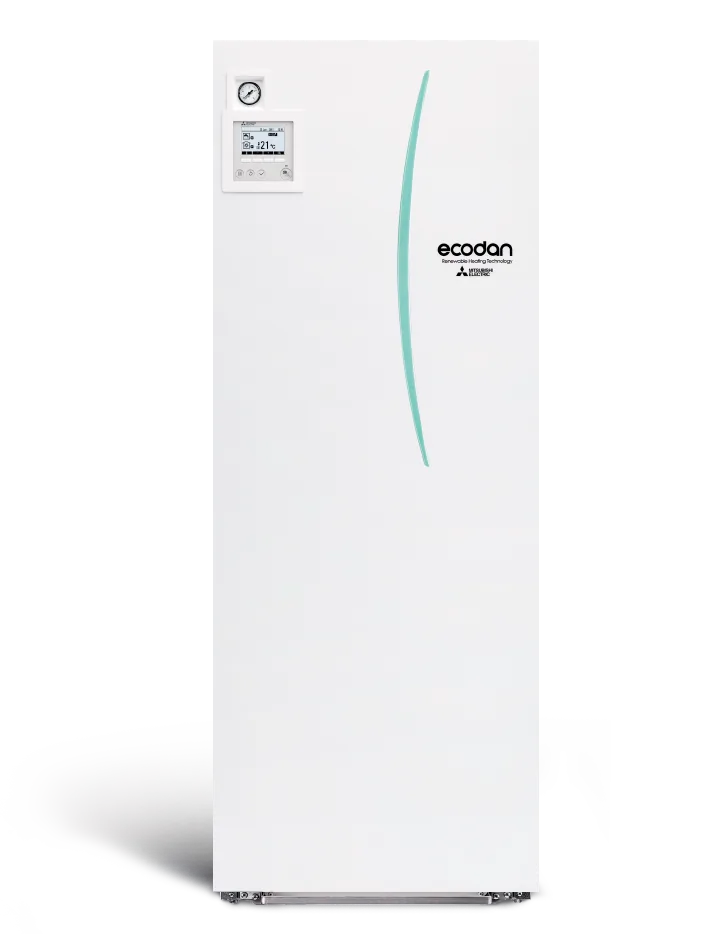
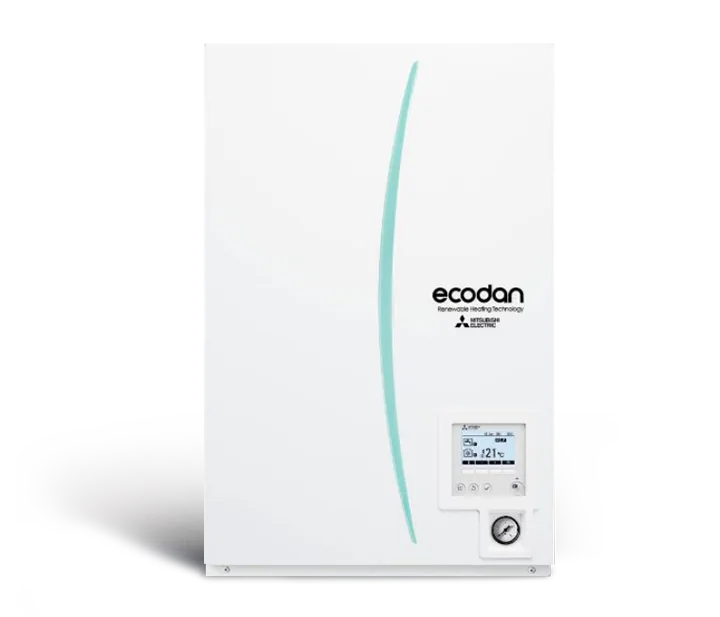
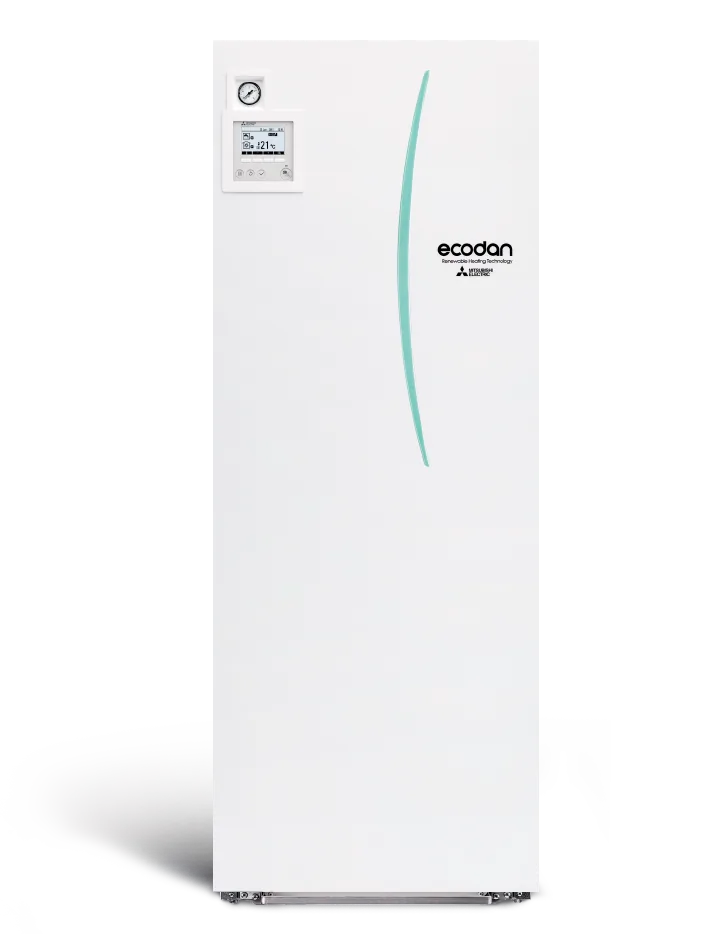
Same principle, but the heat goes into water. Warm water circulates through underfloor heating or radiators, while a separate or integrated cylinder prepares domestic hot water. This is a complete system that can be the only heat source in the house – no fuel storage, no chimney. Mitsubishi Electric ECODAN comes in two types:
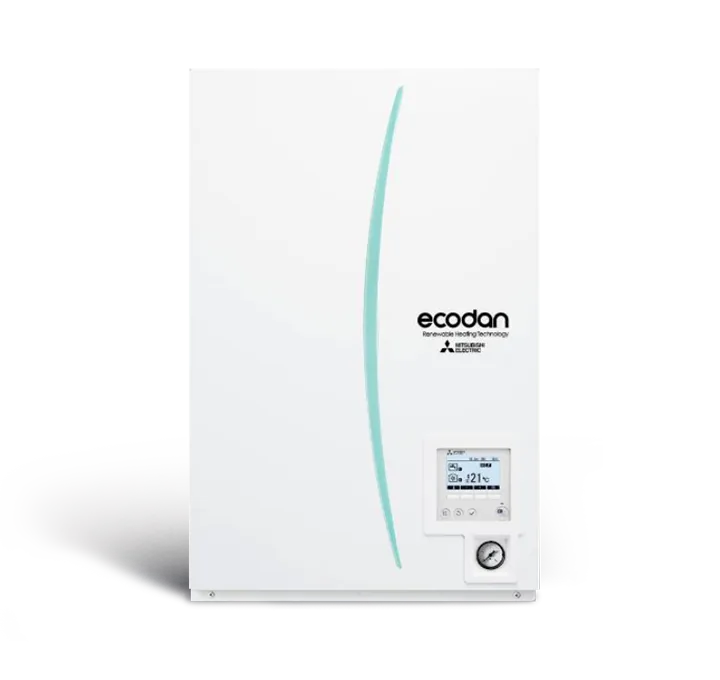
- Split – refrigerant runs to an indoor module (e.g. EHSTD-YM9D with integrated cylinder, or EHSD-YM9D Hydro-box).
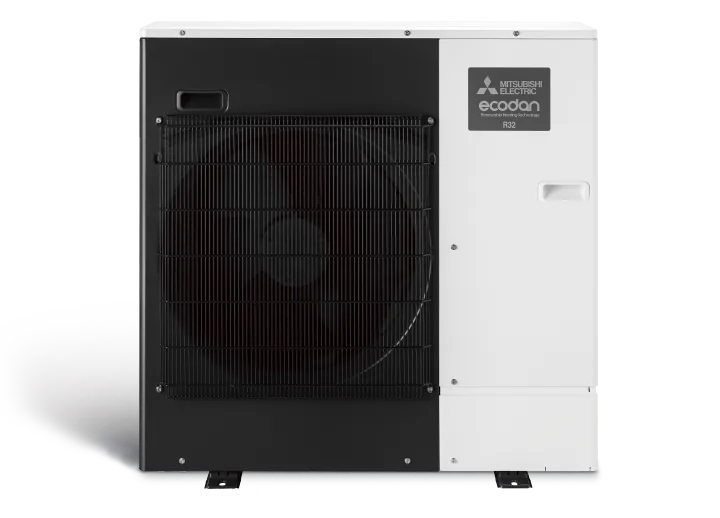
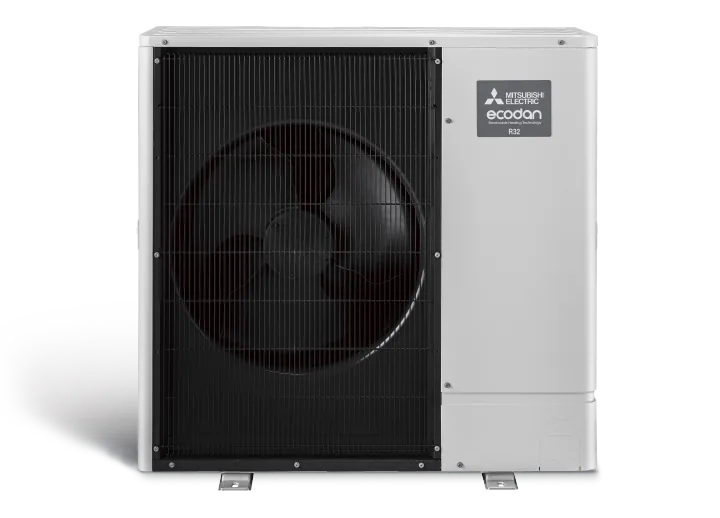
- Monobloc (Package) – the heat exchanger sits in the outdoor unit (PUZ-WM) and water enters the house; plumbing and electrical work is needed.
The lower the flow temperature, the more efficiently the heat pump works – which is why underfloor heating suits it so well. Radiators can work too, provided the required water temperature is assessed correctly.
Ground-source heat pumps
A ground-source system takes heat from the ground through boreholes or a horizontal collector. Ground temperature is more stable than air in winter, so operation is steadier, but groundworks are required. Mitsubishi Electric offers GEODAN. More in air-to-water or ground source.
What decides how well it works in your home
- correct sizing – neither too small nor oversized;
- insulation level and heat emitters;
- outdoor unit position and condensate drainage;
- quality installation, evacuation, leak testing and commissioning;
- regular maintenance.
Common myths about heat pumps
- "A heat pump stops heating in the cold." Modern models, especially with Hyper Heating or ZUBADAN, keep heating in hard frost; only output and efficiency fall, which is why the system is sized for the coldest days.
- "Heat pumps are only for new houses." Air-to-air units are installed in occupied homes and flats, and an air-to-water system can be connected to existing heating if the required water temperature is assessed correctly.
- "The outdoor unit needs no care." The coil must stay clean and condensate must drain, otherwise ice can build up in winter.
- "Bigger is better." An oversized unit cycles more, costs more and wastes its advantages.
Refrigerant work and electrical connection must be done by qualified specialists – for safety and for the warranty.
We handle the whole chain, from selection to service. See how heat moves through your home in the 3D Climate Lab or use the system finder.
Suitable equipment

FAQ
Can an air-to-air heat pump heat radiators?
No. An air-to-air unit heats only room air. Radiators and underfloor heating need an air-to-water or ground-source system.
Does a heat pump make hot water?
Air-to-water and ground-source systems do, with an integrated or separate cylinder. Air-to-air systems do not.
What is the difference between split and monobloc?
In a split system refrigerant enters the house; in a monobloc it is water, because the heat exchanger is outdoors. We choose the type based on your house and installation conditions.
Need a professional assessment?
An EKO2 engineer will review your building and prepare a quotation.