









Bivalent point
The bivalent point is the outdoor temperature below which the heat pump’s capacity is no longer sufficient and an additional heat source starts.
A heat pump’s capacity drops in the cold while the house’s heat demand rises. The temperature at which these two curves cross is called the bivalent point. Below it, the missing heat comes from an additional source – an electric heater or an existing boiler.
- Monovalent system: the heat pump alone covers the full demand down to the design outdoor temperature.
- Mono-energetic system: the heat pump is supplemented by an electric heater.
- Bivalent system: the heat pump works together with another heat source, such as a boiler.
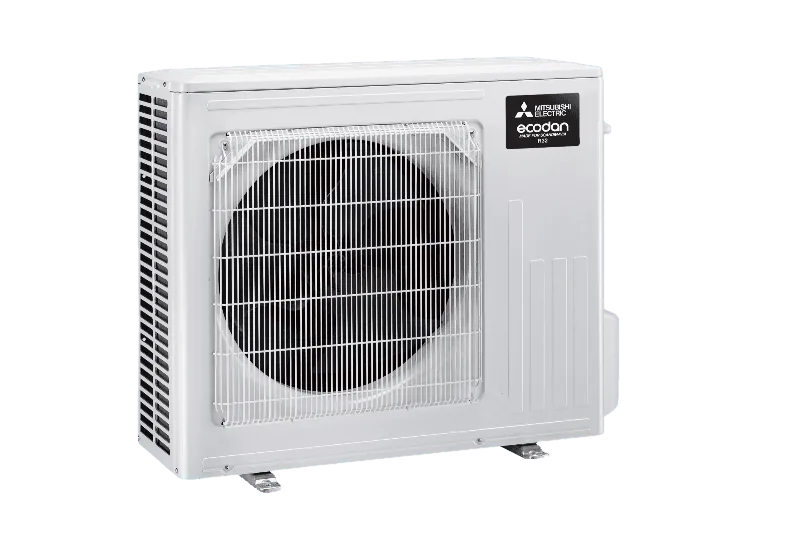
A lower bivalent point means additional heating is needed rarely, but a larger heat pump may be required. Since the coldest hours of a season are few, the optimal solution is often a balance between equipment size and the share of additional heating. Our engineers determine the bivalent point from the building’s heat loss and the manufacturer’s low-temperature capacity data, and Mitsubishi Electric ZUBADAN models allow it to be moved to a lower temperature.