






Which heat recovery ventilator does your home need?
Prepared by EKO2ŠILUMA engineers · Updated 2026-10-29
Modern homes are built airtight – good for heat, but without organised ventilation CO₂, moisture and odours build up indoors. The signs are familiar: condensation on windows, a risk of mould in corners, air that feels stale. A heat recovery ventilator supplies fresh air and extracts used air, and the heat of the extract air warms the supply.
How the Lossnay core works
Mitsubishi Electric Lossnay units use a plate heat exchanger made of a special paper membrane. Supply and extract air never mix – the membrane separates them while transferring heat and some moisture. So in winter you are not just bringing in dry cold air, and in summer part of the humidity stays outside. Heat recovery efficiency depends on model and fan speed; values are shown on product pages according to manufacturer data.
Three key questions
- How much air? Required airflow depends on room use, floor area and occupancy. Exact requirements are set by the designer under current regulations; we select a unit with headroom so it runs quietly below maximum.
- Can ducts be installed? In a new build or renovation – usually yes. In a finished flat – often not.
- Where will the unit go? A plant room, loft, above a suspended ceiling or on a wall – this determines unit type and ease of service.
Ducted systems for houses
Where ducts are possible, fresh air goes to living rooms and bedrooms and is extracted from kitchen, bathroom and WC. Mitsubishi Electric offers several lines:
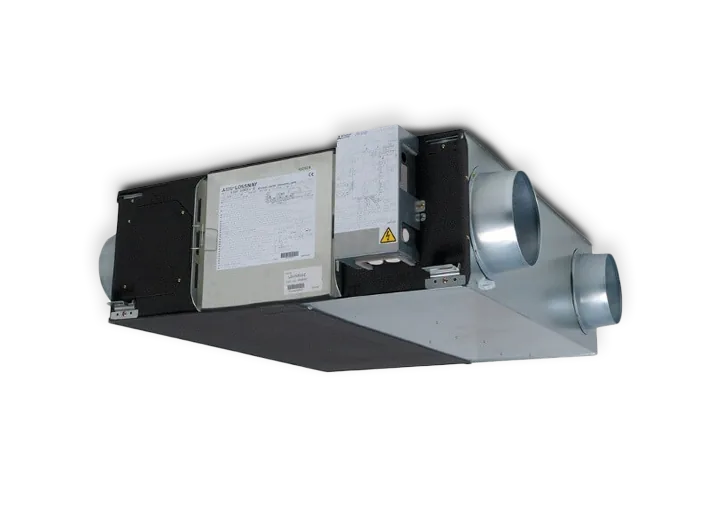
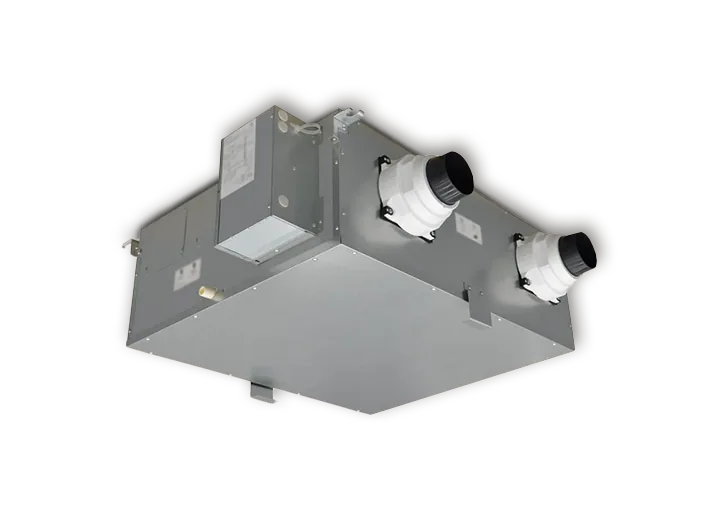
- Lossnay LGH-RVX3 – a ducted system that can be scheduled around your day; often installed above a suspended ceiling.
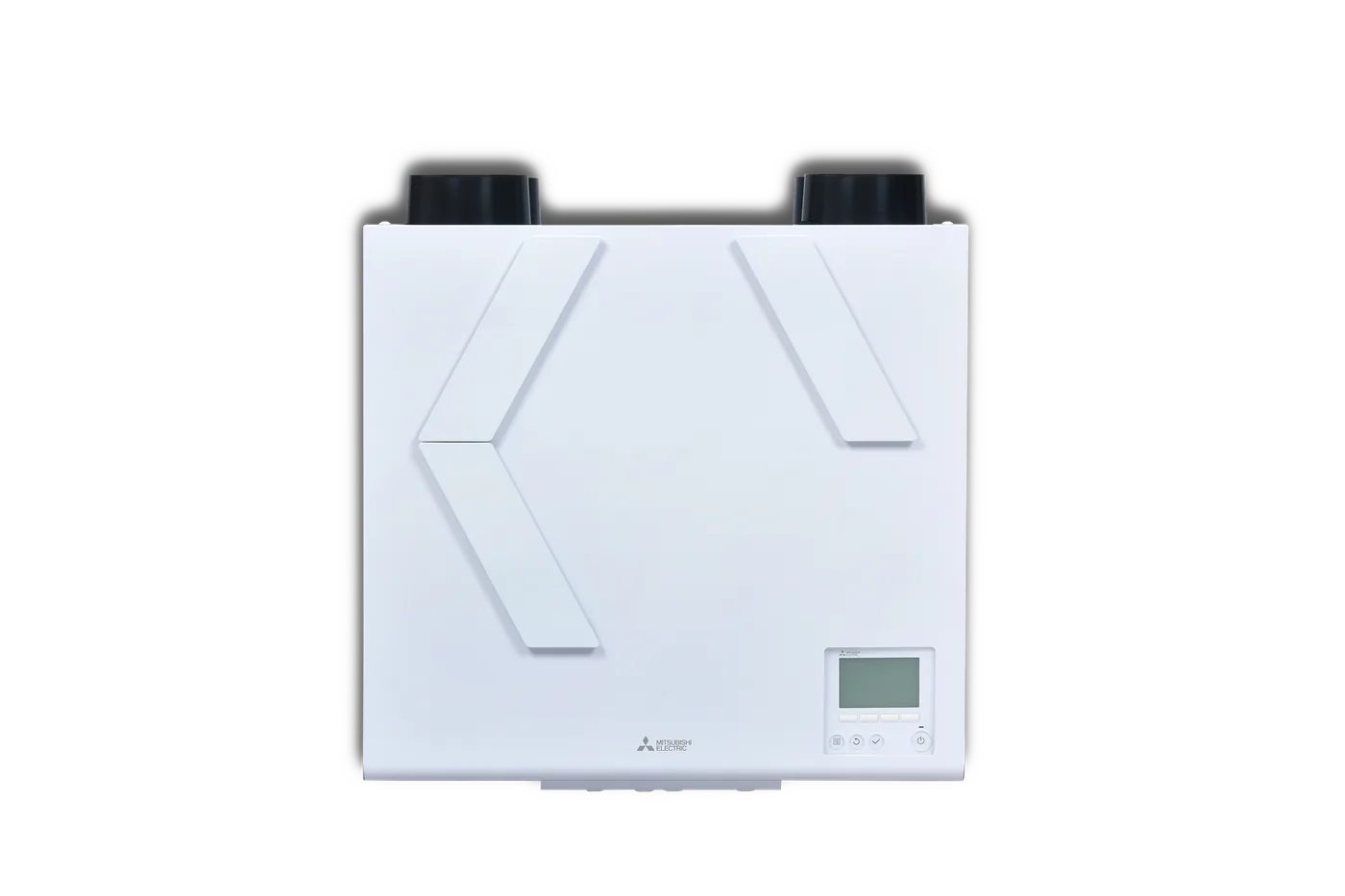
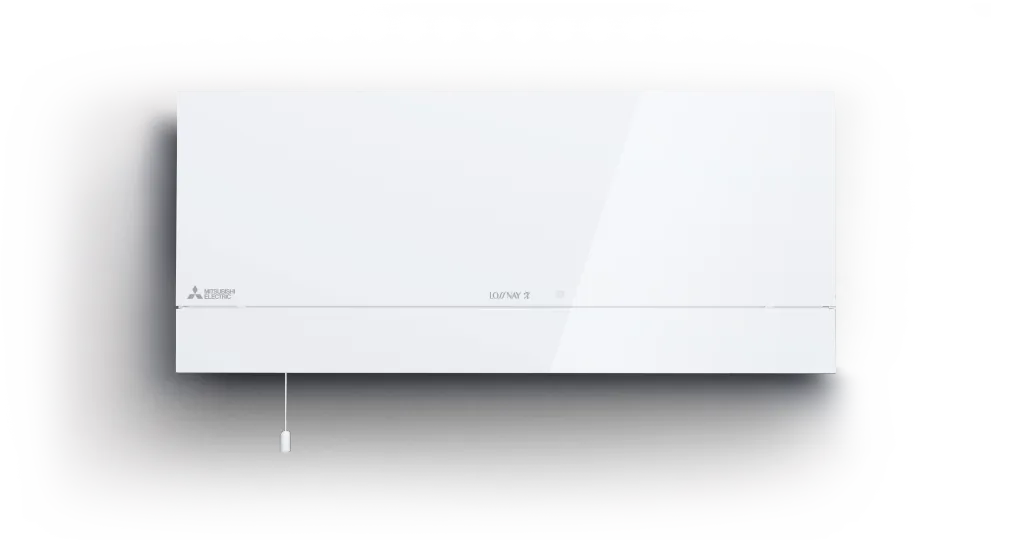
- Lossnay VL-CZPVU-R/L-E – wall-hung ducted units in R and L connection versions, positioned by the manufacturer for high energy-class homes.
- Lossnay VL-220CZGV-E – a compact ducted unit with the Lossnay Diamond core.
The LGH series can be combined with the GUG DX coil and a heat pump outdoor unit, so supply air is also heated or cooled to a set temperature.
Systems without ducts
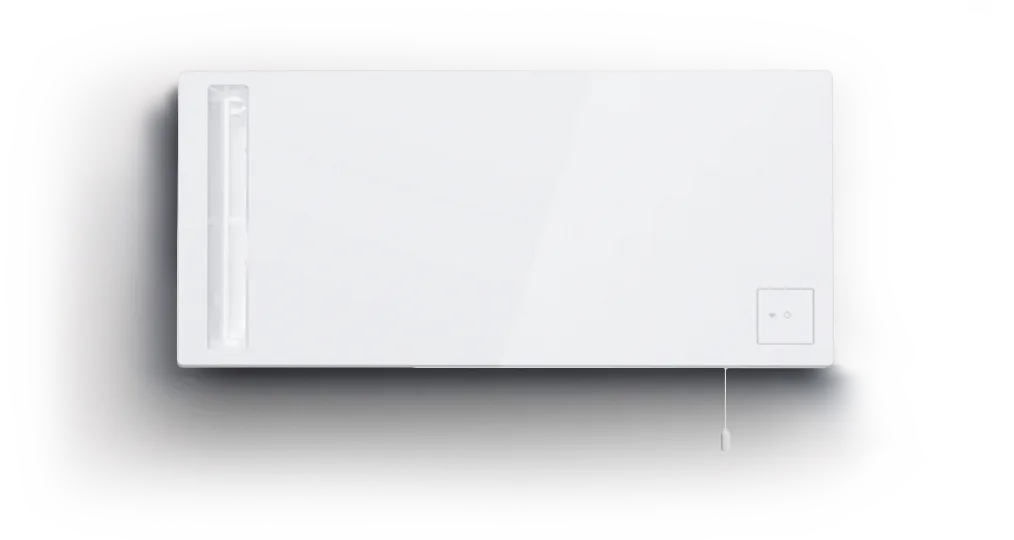
If ducts are not possible, the answer is a wall-mounted decentralised unit. According to manufacturer data in our catalogue, VL-50S2-E typically suits rooms of about 12–40 m² and VL-80U5-E about 49–80 m². More in MVHR or decentralised unit for a flat.
Also consider
- Noise. Not only the unit, but duct diameter, air velocity and silencers.
- Filters. The manufacturer recommends replacing them roughly every six months; standard, F7 and carbon filters are available.
- Controls. Scheduling stops an empty home being ventilated at full speed.
- Power use. Fan input power is in the model data; actual consumption depends on speed and running hours.
How we select a ventilator
Example: a detached house
In a two-storey house with four rooms, kitchen and two bathrooms, fresh air usually goes to bedrooms and the living room and is extracted from kitchen, bathrooms, WC and wardrobe. The unit sits in a plant room or loft where filters are easy to change. Duct routes are kept as short and quiet as possible, and intake and exhaust grilles far enough apart. We prepare this with a duct layout so builders know the openings and routes in advance.
We assess the plan, room use and installation options, calculate airflows, choose the Lossnay unit, design the duct routes, install and balance the system. Get a first calculation from the ventilation planner, see the airflows in the 3D Climate Lab, and when ready, send a project request.
Suitable equipment


FAQ
Does a heat recovery ventilator heat the house?
No. It returns part of the extract air's heat to the supply air, but does not replace heating. Supply air can be heated or cooled further with a GUG DX coil.
Why does the Lossnay core transfer moisture?
Its plates are made of a special paper membrane that lets water vapour through while the airstreams stay separate. This helps keep humidity balanced.
When is the best time to plan ventilation?
As early as possible – ideally at the design or renovation stage, while duct routes and the unit location can still be planned.
How often should filters be replaced?
The manufacturer recommends about every six months, more often in dusty locations. You can order filters through us.
Need a professional assessment?
An EKO2 engineer will review your building and prepare a quotation.