








Commercial air conditioning and heating in Lithuania
A shop, café, salon or service space has to stay comfortable all year round – whatever the heat, the cold or the footfall. We select MITSUBISHI ELECTRIC Mr. Slim and multi-split systems that cool and heat, and take care of installation and maintenance ourselves.
How commercial premises differ from a flat
In a commercial space the load swings far more than in a home: the shop is empty in the morning and busy in the afternoon, while display lighting, coffee machines or ovens give off heat all day. Doors open hundreds of times a day and staff stand in the same place for a whole shift. A domestic air conditioner hung "wherever it fits" therefore often causes draughts at the till, noise by the tables and too little cooling at peak times. A commercial solution is selected around how the space is really used.
Which solution fits when
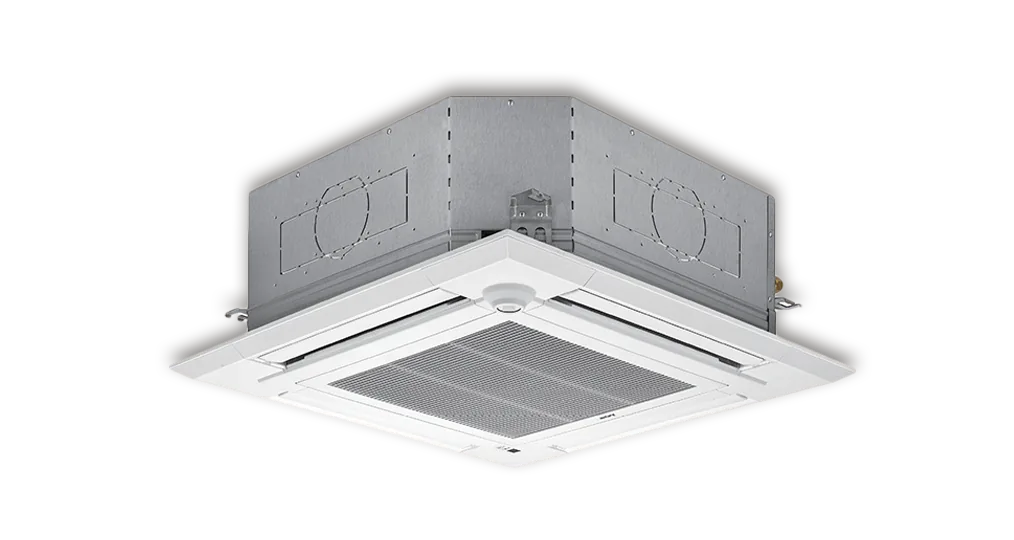
- Cassette units (PLA-M-EA) – where there is a suspended ceiling; air is spread evenly in several directions and the unit stays discreet.
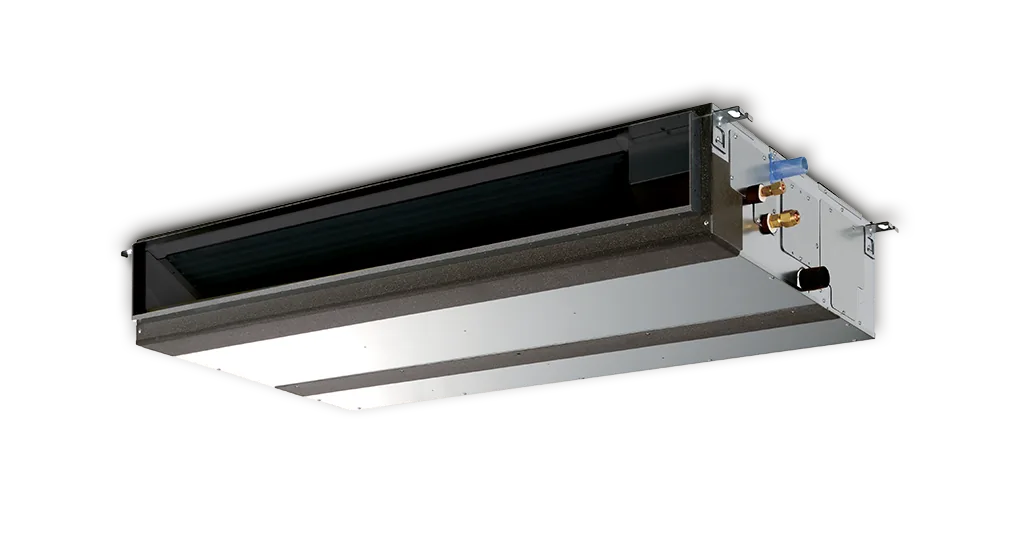
- Ducted units (PEAD-M-JAL) – when no visible equipment is wanted; air is supplied through grilles and one unit can serve several rooms.
- Ceiling-suspended units (PCA-M-KA) – where there is no suspended ceiling, for example in tall retail or loft-style spaces.
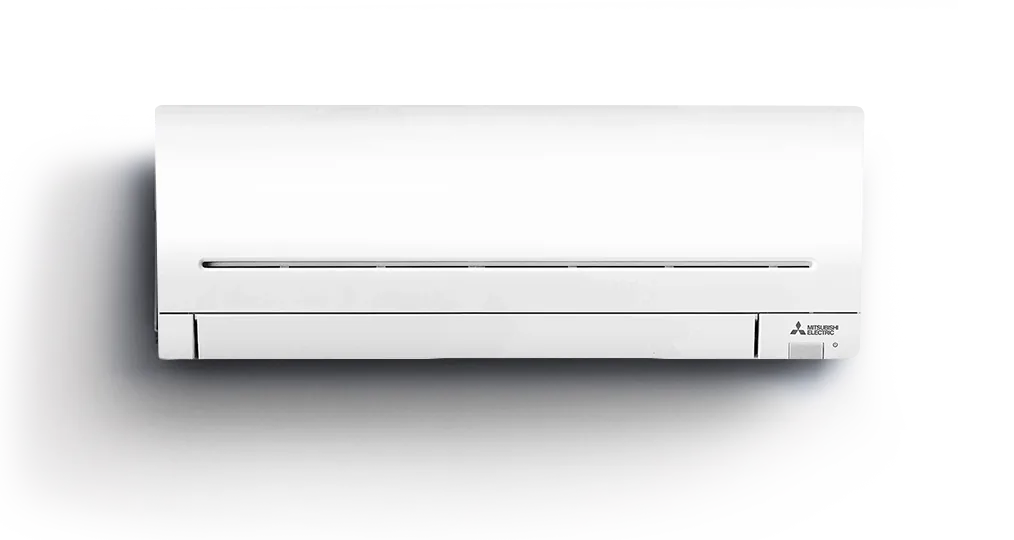
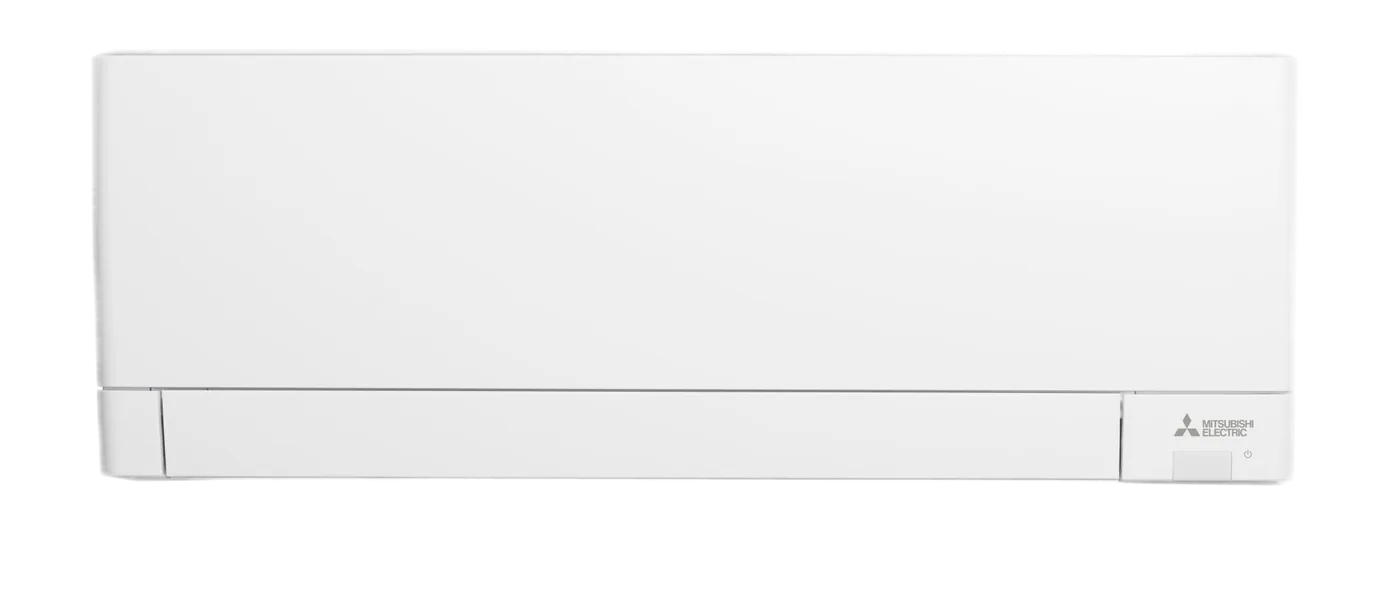
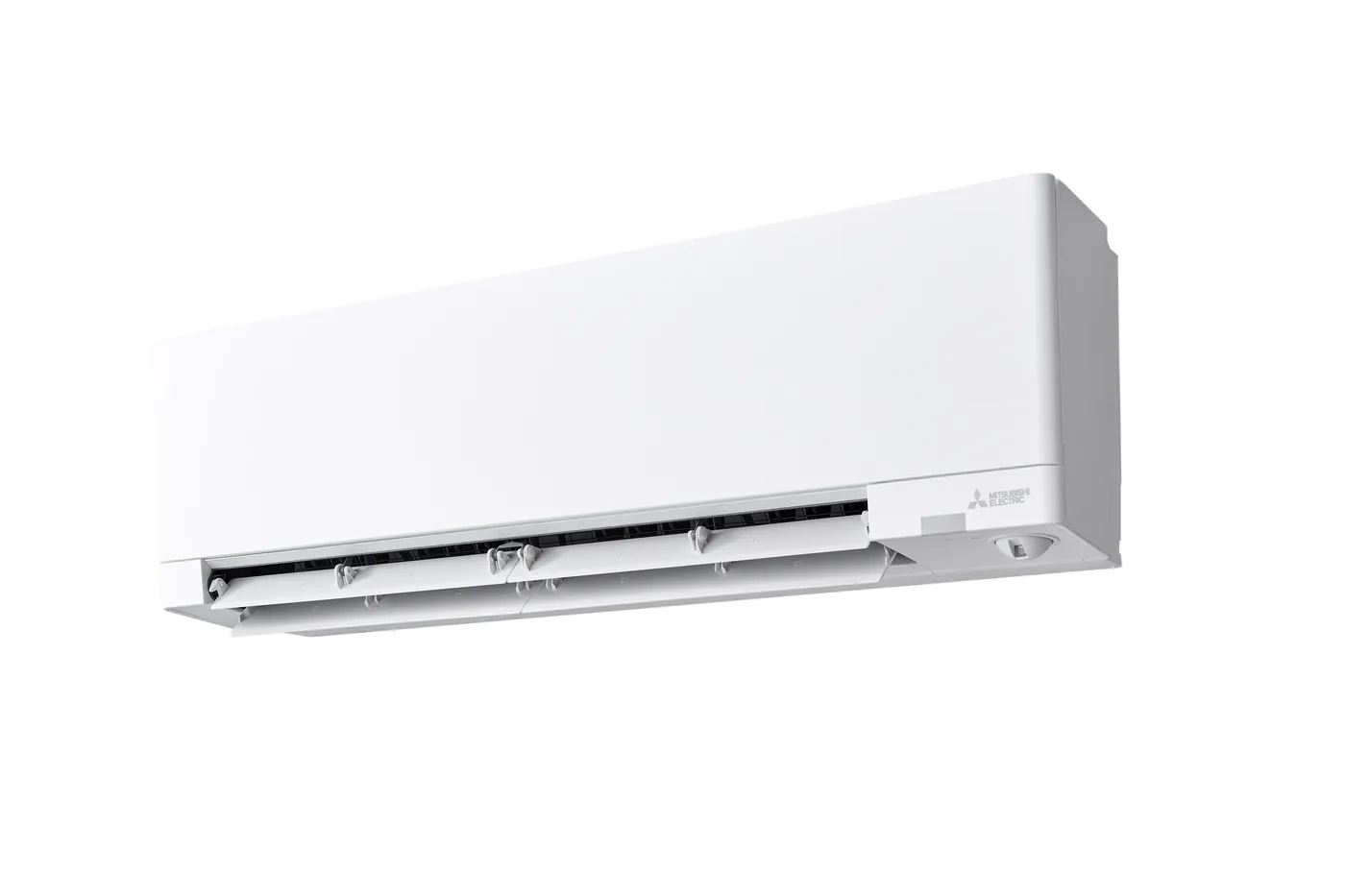
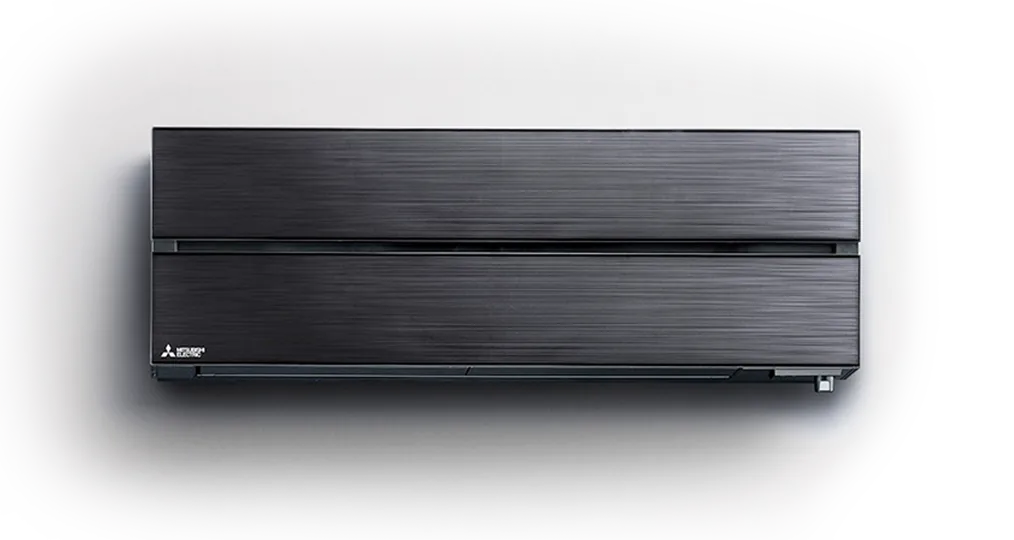
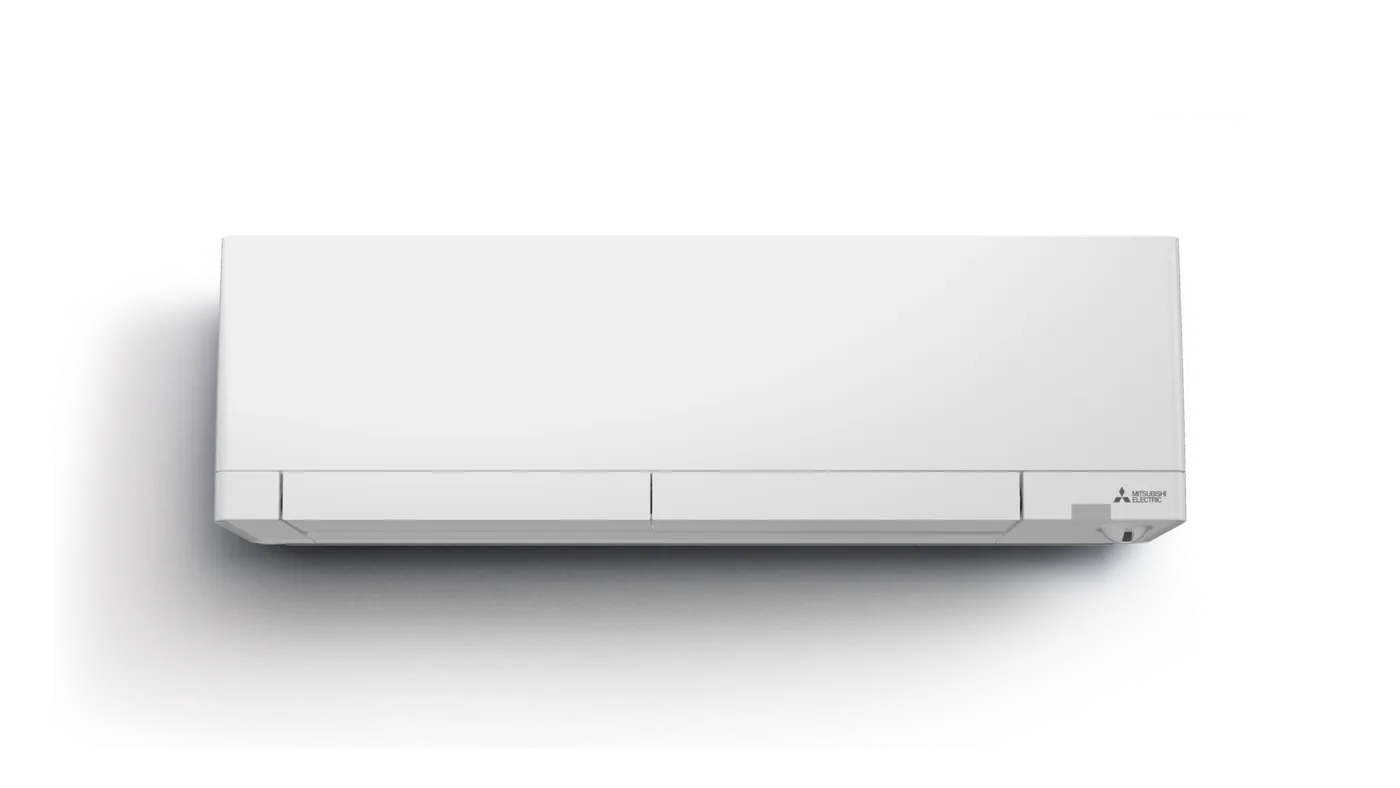
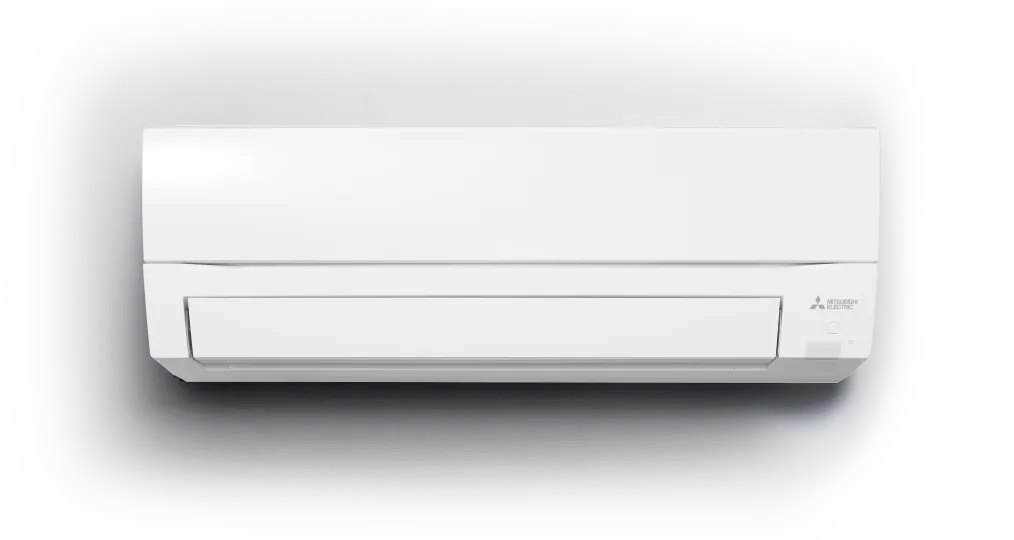
- Wall-mounted units (PKA-M-LAL, MSZ-AP) – for smaller shops, hair salons, cafés and treatment rooms.
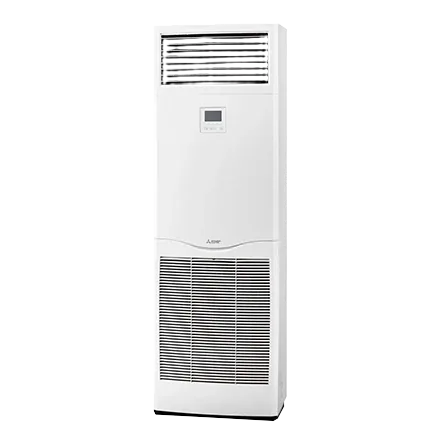
- Floor-standing units (PSA-M-KA) – for larger halls where a floor unit is the practical choice.
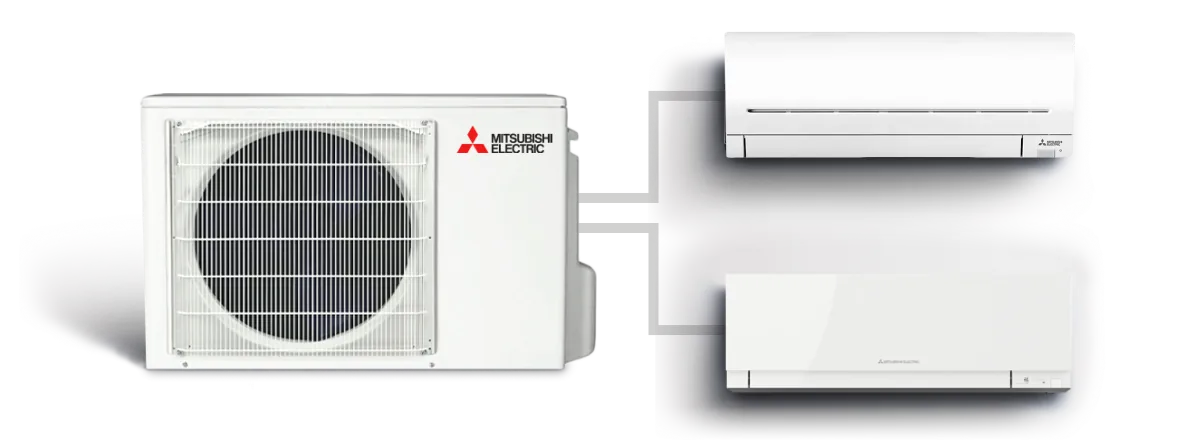
- Multi-split (MXZ) – when several small rooms need to share one outdoor unit.
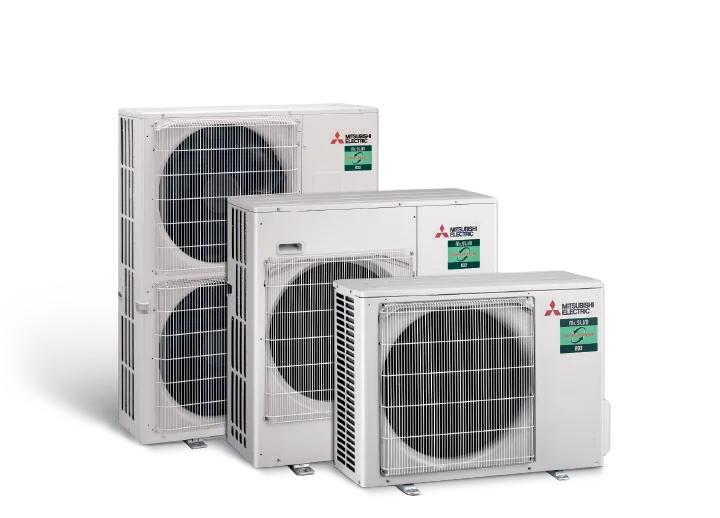
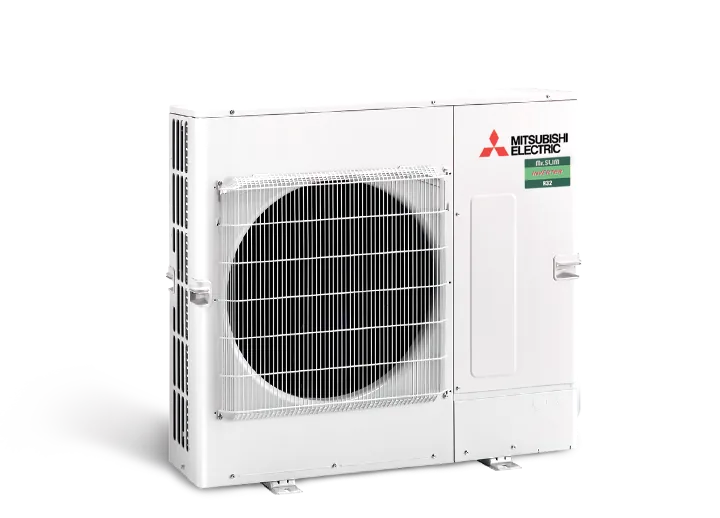
Outdoor units are chosen from the Power Inverter or Standard Inverter ranges, depending on whether the system will be the main heat source or mainly used for cooling. Where there are many different rooms, we consider a VRF system.
Controls, chains and multiple sites
For retail chains, franchises and companies running several premises, what matters is not a single air conditioner but the same logic at every site. We therefore propose standardising unit types and controls: wired controllers with limited set-point ranges so staff cannot accidentally overload the system, weekly schedules matched to opening hours and, where needed, remote monitoring via MELCloud or a central controller. That makes it easier to plan spare parts, maintenance and new store fit-outs from the same template.
What we need from you
To start, send a floor plan with dimensions and ceiling height, and tell us the use (retail, food service, beauty services, office), opening hours, expected numbers of customers and staff, and any heat-emitting equipment. Possible outdoor unit locations – yard, roof, facade – matter too, as do the requirements of the building manager or the municipality. If the premises are leased, the landlord's consent and technical conditions will help. The easiest way to share the data is a project request; for a first direction you can use our system finder.
Project stages
- Survey – we check the room, ceilings, routing options, condensate drainage and the electrical board.
- Concept – we propose unit types, quantities and positions so air does not blow straight at customers or workstations.
- Specification – specific models, controls and accessories.
- Quotation – an offer for equipment and installation based on the specification.
- Supply and installation – planned to disturb trading as little as possible, for example outside opening hours or before launch.
- Commissioning – we set modes, air directions and controls and brief your staff.
- Maintenance – periodic servicing agreed with you; terms are set individually.
Typical risks
Insufficient cooling at peak times. We look beyond floor area at solar gain, shop windows, equipment and footfall. Draughts and noise. Air distribution is planned around furniture and workstations. Condensate problems. Drainage is planned in advance, with a condensate pump where gravity drainage is not possible. Grease and dust. In cafés and kitchens we agree cleaning frequency, and for kitchens with open flames we propose stainless-steel PCA-M-HA units. Facade restrictions. The outdoor unit position is agreed with the building manager before equipment is ordered.
Documentation
After the works we hand over manufacturer datasheets, a specification of the installed equipment, an as-built diagram of piping and electrical connections, the commissioning record and an equipment list with serial numbers. For retail chains and multi-site operators this list helps manage the entire equipment fleet.
Maintenance
Filters in commercial premises clog faster than at home, especially in food service and retail. Regular servicing – cleaning filters and heat exchangers, checking drainage and operating parameters – keeps air quality and efficiency where they should be. We carry out maintenance in Kaunas, Vilnius, Klaipėda and the surrounding districts; for sites in other regions, please get in touch.
How 3D works
Commercial air conditioning and heating in Lithuania – 3D
Interactive model: rotate, zoom, click on components.
FAQ
What air conditioner does a shop need?
It depends on the ceiling, room size, shop windows and footfall. With a suspended ceiling a cassette unit often works well; without one, a ceiling-suspended or wall-mounted unit. We size capacity and positions from the plan.
Can a commercial air conditioner also heat?
Yes. Mr. Slim units are heat pumps that both cool and heat. Whether they can be the main heat source is assessed from the room's heat loss and the manufacturer's data.
Can you install outside opening hours?
We agree the timing with you. Often part of the work can be done in advance, with indoor work scheduled when it disturbs trading least.
What should we choose for a café kitchen?
In kitchens with grease in the air we consider stainless-steel PCA-M-HA ceiling-suspended units with a grease filter. The final decision follows an assessment of kitchen equipment and ventilation.
How often should commercial air conditioners be serviced?
Frequency depends on use and contamination: filters clog faster in food service and retail. We set the maintenance plan from manufacturer recommendations and operating conditions.
Equipment