








Industrial air conditioning for production, kitchens and technical rooms
Where there is grease, dust, moisture or process heat, a domestic air conditioner will not last. We select MITSUBISHI ELECTRIC units built for exactly these conditions.
When you need industrial air conditioning
Cooling a production area, air-conditioning a restaurant kitchen or controlling a workshop climate are not office tasks. Heat comes from machines and processes, the air carries grease, flour, dust or moisture, and equipment often runs longer than a single shift. A standard wall-mounted unit quickly fouls in these conditions, its coil loses performance and breakdowns stop production.
Industrial air conditioning is selected by environment, heat sources and operating mode. We start by asking what has to be protected – people, product, equipment, or all of them.
Solutions by room type
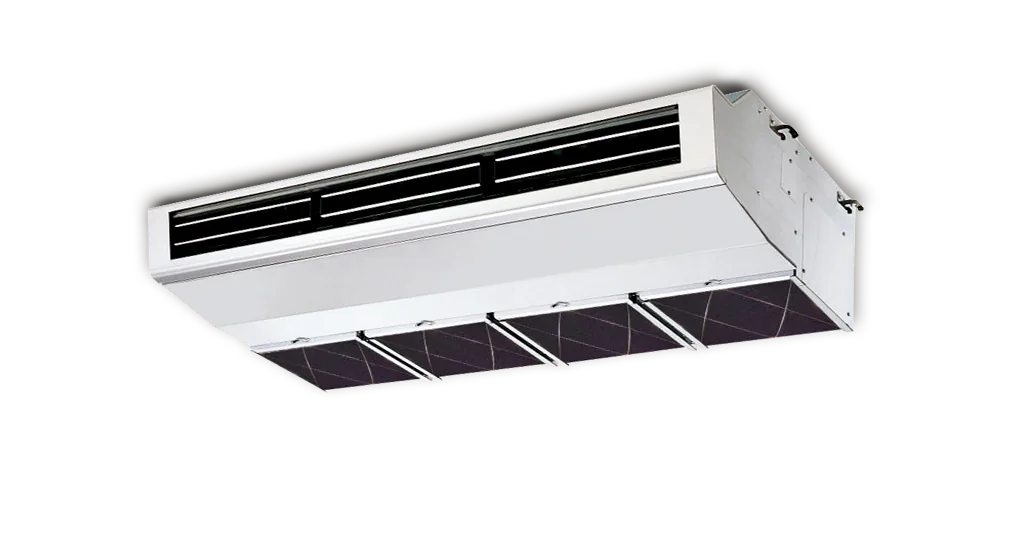
- Restaurant and production kitchens. PCA-M-HA ceiling-suspended units have a stainless-steel casing and an integrated grease filter – a solution for kitchens cooking over open flame.
- Dusty and damp production areas. IDH-D units are designed for dirty and dusty spaces, and WDH convectors for dusty and damp rooms, with no filters.
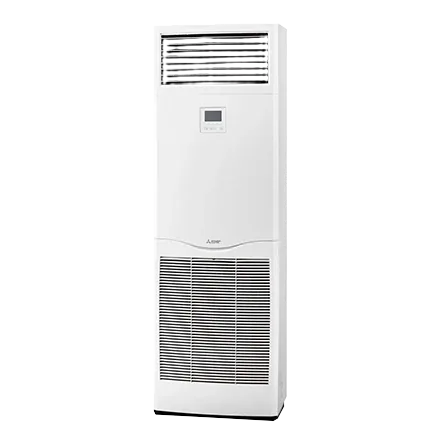
- Larger spaces without suspended ceilings. Floor-standing PSA-M-KA or ceiling-suspended PCA-M-KA units.
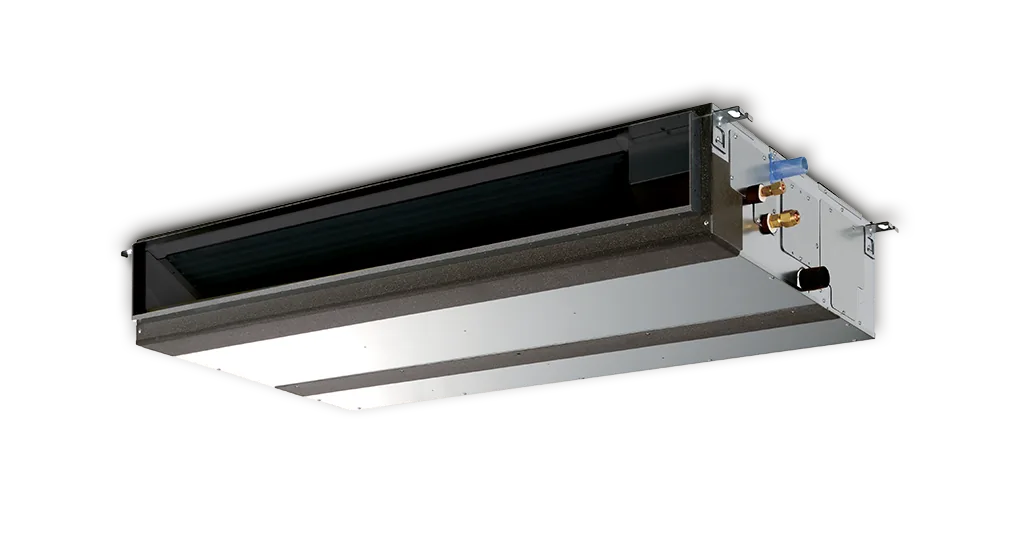
- Ducted distribution. PEAD-M-JAL ducted units when air must reach several points or the interior must stay clean.
- Cooling through an air handling unit. The PAC-IF013B-E interface connects a MITSUBISHI ELECTRIC outdoor unit to the AHU’s DX coil.
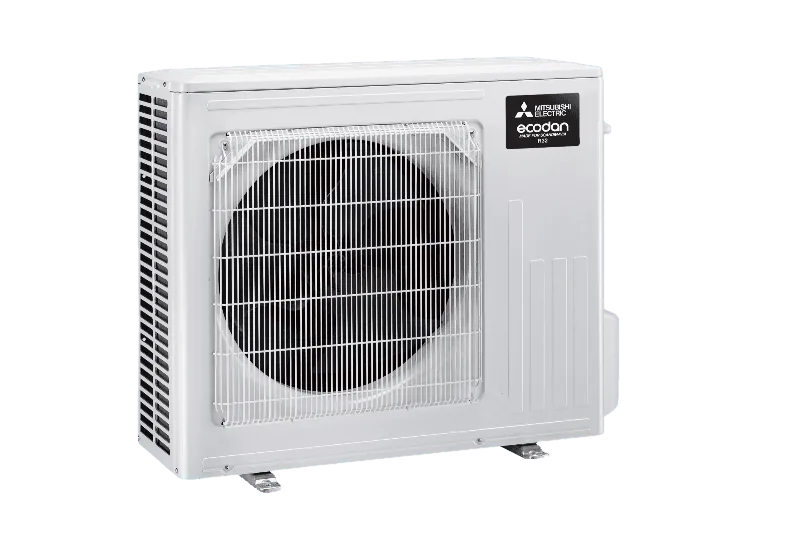
Outdoor units come from the Mr. Slim ranges; when the same system must also heat in winter we consider ZUBADAN PUHZ-SHW.
What we need from you
Room plans and heights, a list of process equipment with its power or heat output, operating schedule and shifts, required temperature and, where relevant, humidity. For kitchens – hood and ventilation details; for production – the type of dust or vapour. Also outdoor unit locations, electrical capacity and whether work will take place during production.
Project stages with EKO2ŠILUMA
- Survey – heat sources, contamination, mounting positions, routes and power.
- Concept – indoor unit types, zoning, cooling with or without heating.
- Specification – models, accessories, condensate solutions and controls.
- RFQ and quotation – based on the specification or your request.
- Supply and installation – coordinated with the production cycle and hygiene rules.
- Commissioning – mode checks, control settings and staff briefing.
- Service – a maintenance contract with intervals matched to contamination.
Typical risks and how we handle them
Underestimated process heat. Capacity is calculated from equipment and process heat gains, not floor area alone. Grease and dust. We choose indoor units built for the environment and define the cleaning interval clearly. Draughts at workstations. Air throw is planned so cold air does not blow directly onto staff or product. Condensate. Drain routes and connections are agreed in advance. Production downtime. Installation is scheduled for weekends, breaks or shutdowns according to your plan.
Hygiene, safety and controls
In food production and catering it matters that air conditioning equipment does not become a place where dirt collects. We choose units that are easy to clean and agree their position over work surfaces and the condensate connections. In production, remote status visibility and fault alarms are often important – we discuss central control or integration with the building or production management system.
Existing system or new
If the premises already have cooling equipment, we assess its condition and whether it still matches today’s heat gains. Sometimes it is enough to add capacity in the zone with the highest load; sometimes replacing the whole solution is more rational – we show this at concept stage with clear arguments. Either way, the decision is based on your data, not on catalogue capacity alone.
Documentation we hand over
Manufacturer datasheets, the equipment specification, commissioning records, an as-built schematic and an equipment inventory with serial numbers and locations – useful for internal audits and maintenance planning. Manufacturer documents are also in the document library.
Maintenance
In an industrial environment maintenance is not an extra but the condition for keeping performance. A plan can include cleaning indoor units and filters, checking coils and drainage, cleaning outdoor units, measuring operating parameters and checking controls. Frequency and contract terms are agreed individually for your environment and operating hours – see the service page.
EKO2ŠILUMA is the official Mitsubishi Electric representative in Lithuania. Need to cool a production area, kitchen or workshop? Send us the details and we will select an industrial solution.
How 3D works
Industrial air conditioning for production, kitchens and technical rooms – 3D
Interactive model: rotate, zoom, click on components.
FAQ
Which air conditioner suits a restaurant kitchen?
For kitchens cooking over open flame there are stainless-steel PCA-M-HA units with a grease filter. We size them after assessing the kitchen equipment and ventilation.
Can an industrial air conditioner also heat?
Yes, most of these systems work as heat pumps. If winter heating matters, we choose the outdoor unit accordingly.
Why is a domestic air conditioner unsuitable for production?
Grease, dust and long operating hours quickly foul a domestic unit’s coil and filters. Industrial units are designed for that environment and are easier to maintain.
Can you install without stopping production?
We schedule installation around your plan – weekends, breaks or planned shutdowns. The exact plan is agreed in advance.
How often does an industrial air conditioner need servicing?
It depends on contamination, operating hours and manufacturer recommendations. We set it at handover and can include it in a maintenance contract.
Equipment